Gestalt | Triptych
Gestalt
2019200 х 450
Acrylic on canvas
ID: SILA-2019-PNT-035About the Work
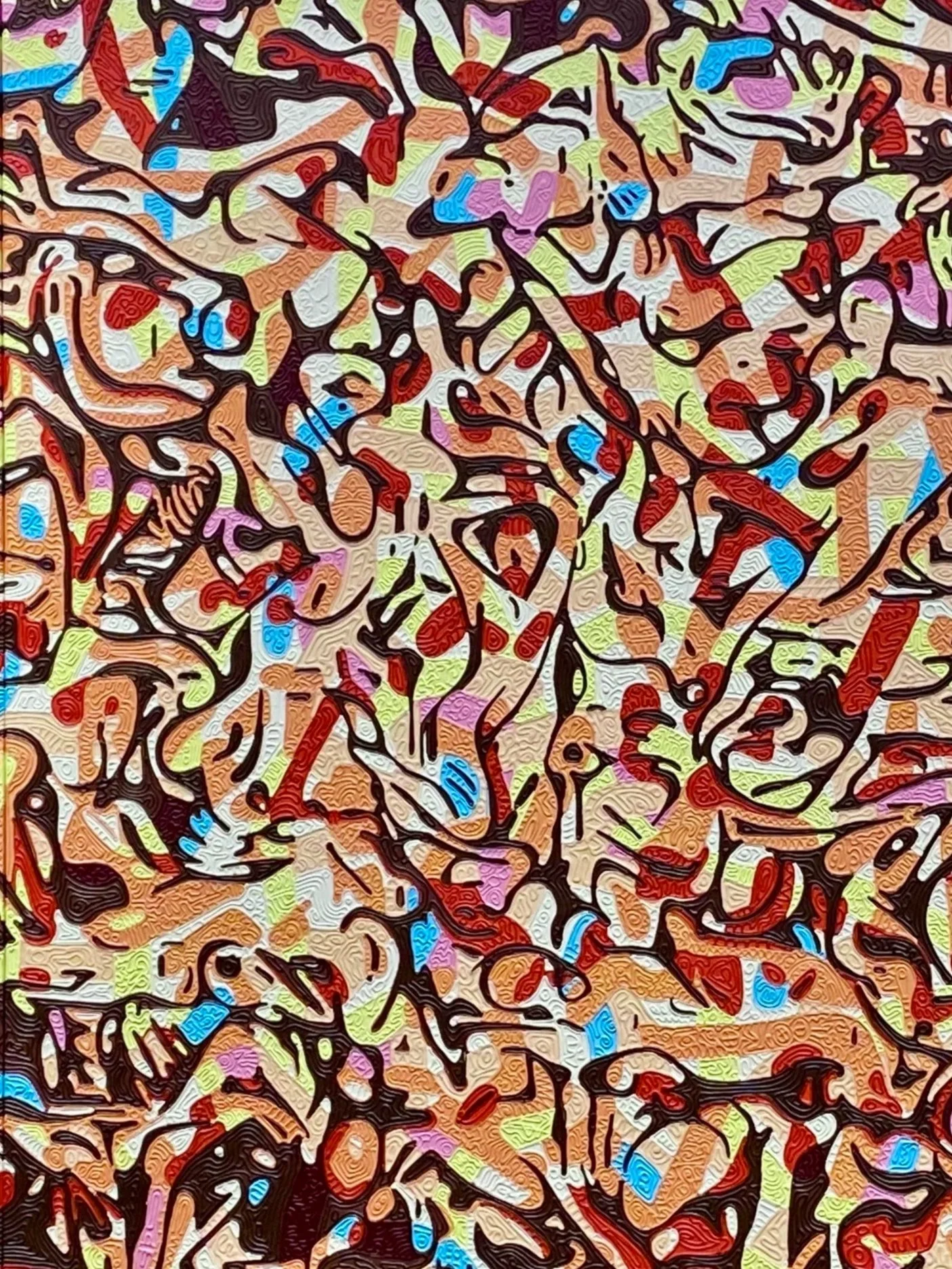
In Gestalt, human connection takes the form of an entanglement of bodies. Nude figures press against, intersect and extend into one another until it becomes difficult to determine where one body ends and another begins. A face, a hand or the curve of a torso briefly establishes an individual presence. Following its contour leads the eye into someone else.
Across three canvases, Iryna Sushelnytska gives physical form to the contradiction of interdependence. Contact with others shapes a person through intimacy, desire, memory and vulnerability. The same relationships can exert pressure, compromise boundaries and threaten a sense of self. Within the painting, proximity holds both the possibility of belonging and the risk of being absorbed.
The composition draws its coherence from the fragmentation of individual bodies. Repeated contours and interlocking areas of colour connect the surface, while making each figure harder to isolate. Its visual appeal draws the viewer closer; sustained attention reveals the tension on which that coherence depends. What initially appears unified is held together by bodies whose integrity remains unsettled.
The title names this unstable relationship between parts and whole. Each fragment participates in a larger structure without becoming entirely anonymous. Recognition persists, but it never settles into a definitive separation of one person from another.
Composition, Process and Scale
The triptych developed through numerous preparatory sketches. The fragmentation of figures required deliberate decisions about where a body would remain recognisable, where its contour would break and how its parts would interact with neighbouring forms. Apparent congestion rests on a carefully developed composition.
Sushelnytska worked on canvases already mounted on stretchers. Each passage had to be considered both locally and within a field four and a half metres wide. The three physical supports remain distinct, while the relationships between figures hold them together as a single work.
At two metres high, the painting establishes a bodily relationship with the viewer. From a distance, the composition gathers into a continuous field. Close up, attention shifts to anatomical fragments, intersections and the relief of the acrylic surface. Moving between these distances repeatedly changes the relationship between the individual body and the collective image.
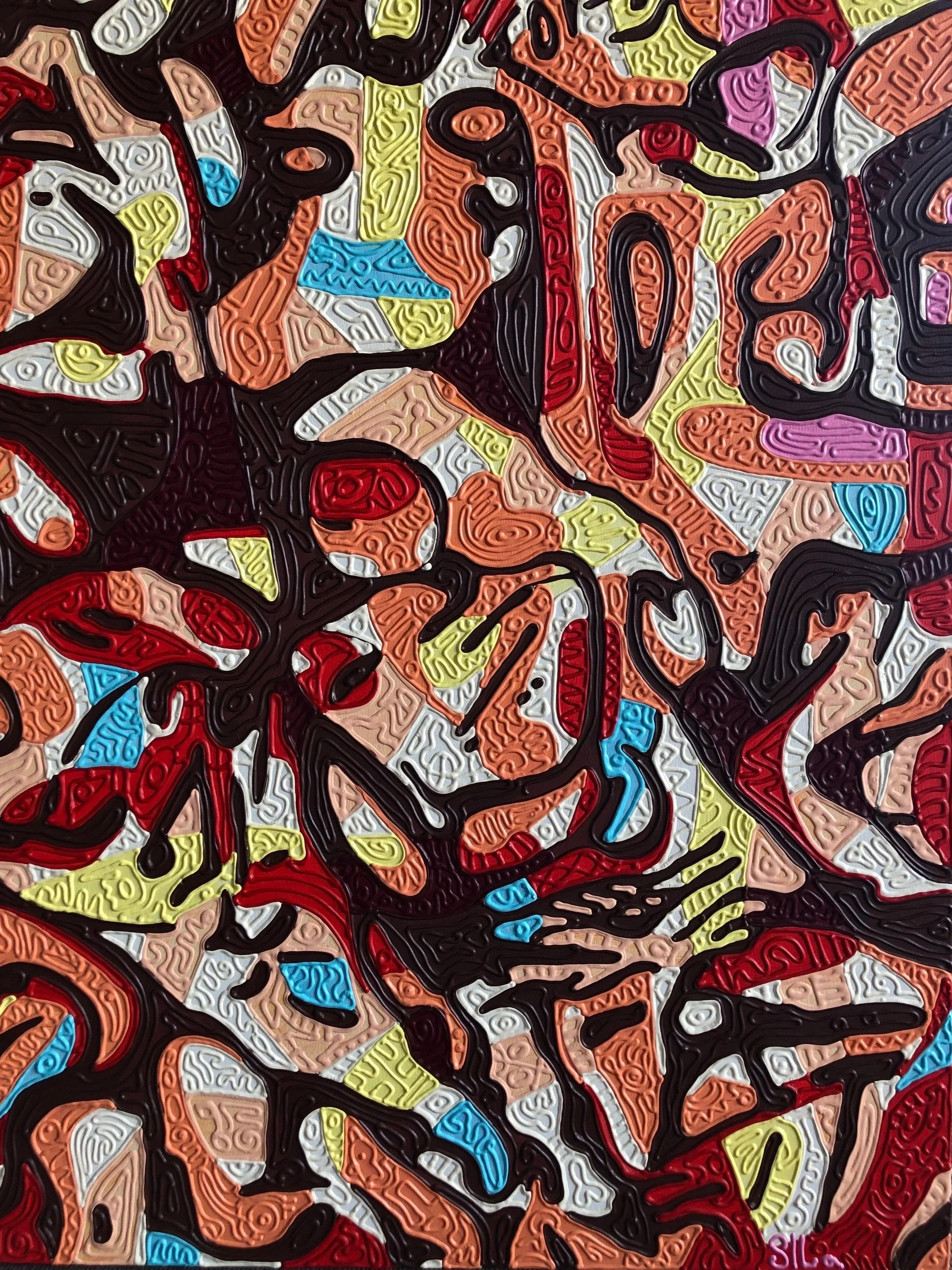
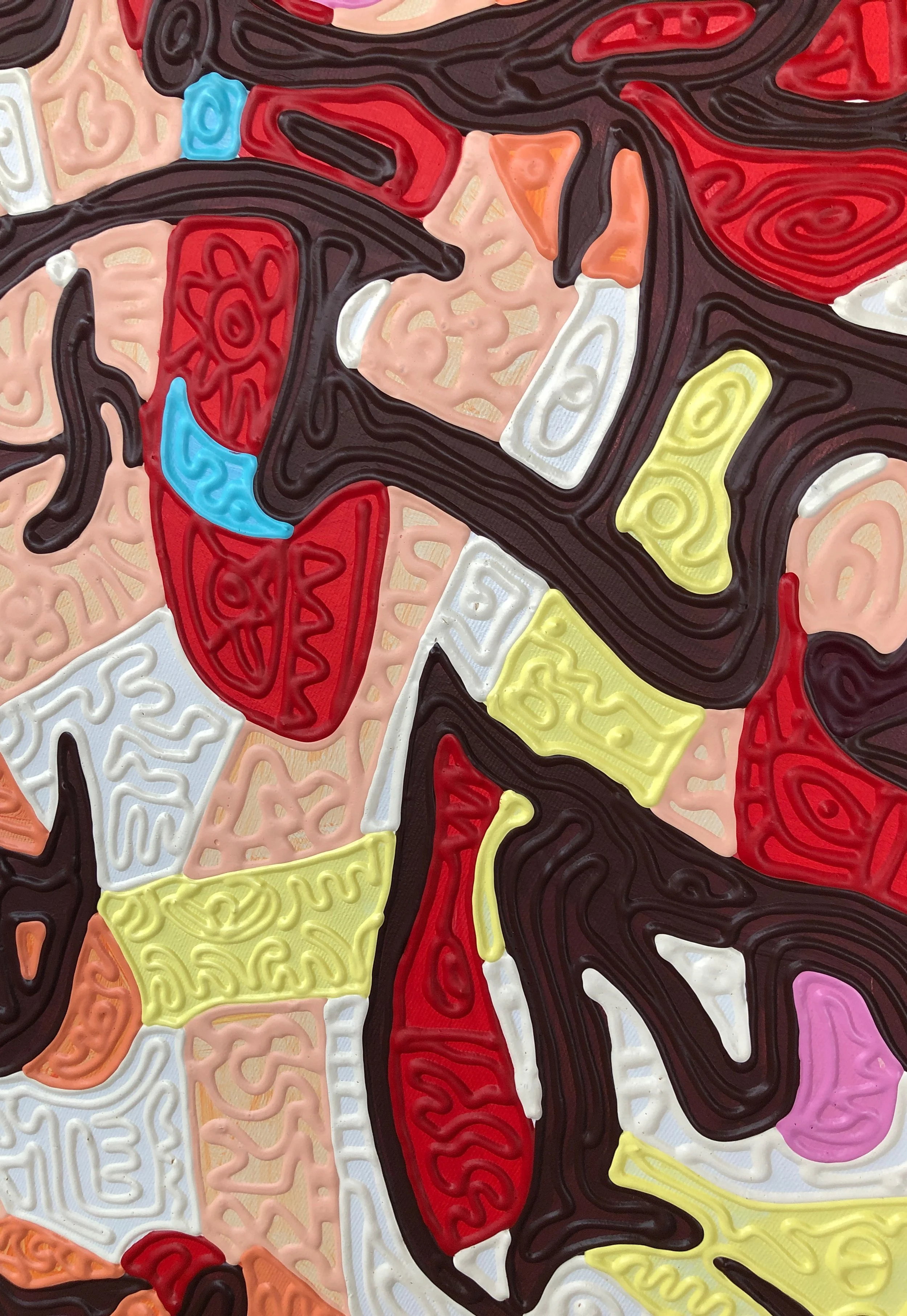
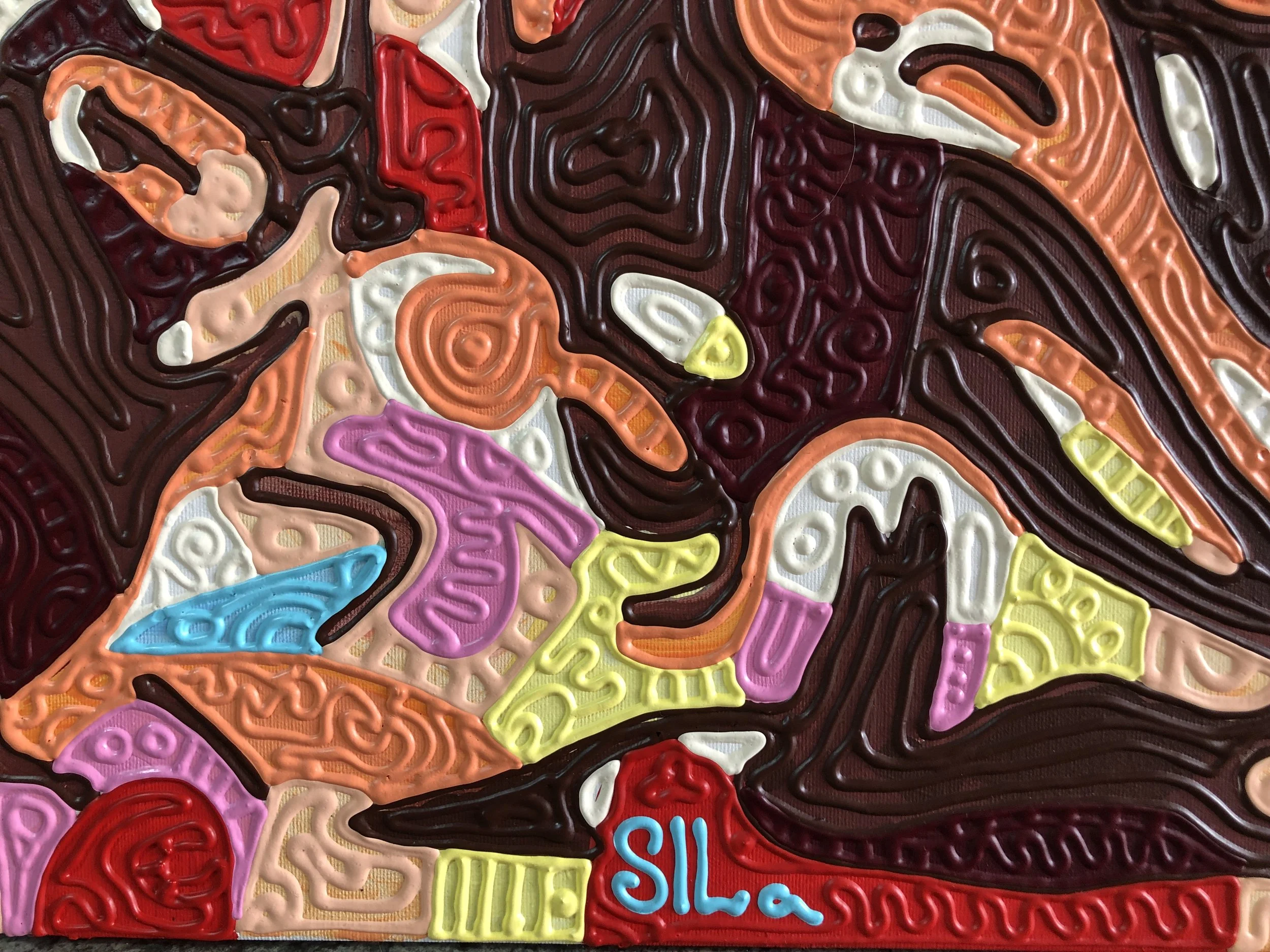
The painting’s bodily presence also emerges through the way paint is applied. Over the brushworked layer, Sushelnytska builds further accumulations of acrylic squeezed directly from the tube. Lines acquire thickness; intersections become concentrations of matter. This build-up gives physical substance to the tension within the composition: as individual bodies become harder to separate, the painted surface acquires a body of its own. In keeping with the artist’s method, accumulated matter develops into volume and corporeal presence. The relief projects into the viewer’s space, as though the compressed multitude were pressing against the limits of the canvas.
Historical and Cultural Context
Pablo Picasso’s Les Demoiselles d’Avignon (1907) offers a point of comparison for the treatment of the nude as a site of pictorial rupture. Its angular bodies and compressed space disturb the continuity of anatomical form. In Gestalt, fragmentation extends across a multitude: the body becomes inseparable from the relationships through which the entire composition is constructed. The Museum of Modern Art
A closer parallel to the unstable boundary between body and abstraction can be found in Willem de Kooning’s Attic (1949). Its dense network of angular and curving forms retains anatomical suggestions while making figure and surrounding space difficult to distinguish. The Metropolitan Museum of Art
Seen alongside these works, Gestalt brings the question of pictorial fragmentation into the sphere of human interdependence. Recognisable bodily fragments remain caught within a shared structure. The difficulty of separating figure from field becomes a way of approaching the difficulty of maintaining a self within relationships that both sustain and constrain it.
This tension belongs to Sushelnytska’s broader method, in which bodily form becomes discernible, enters into larger structures and approaches dissolution. In Gestalt, these conditions coexist. The individual remains present, but the boundaries of that presence are continually contested.
The painting leaves a question unresolved: at what point does the connection that allows us to exist together begin to erode our ability to remain ourselves?
Artwork Information
A unique original triptych comprising three acrylic paintings on canvas, mounted on stretchers. The three panels constitute a single work.
Scale reference
Surface Details
Close-up views of Gestalt: acrylic applied directly from the tube builds a dense relief over the brushworked surface. Interlocking bodily fragments acquire material thickness, giving the painting a physical presence that extends beyond the image.